The Sapphire Crystal Revolution: How Premium Watch Technology Became Accessible in 2026
Sapphire Crystals Move Downmarket: A 2026 Market Shift
The watch industry is experiencing a significant shift as sapphire crystal technology becomes increasingly accessible to mid-range and affordable brands. What was once reserved for five-figure luxury timepieces is now a standard feature in watches priced under $500, fundamentally changing consumer expectations and competitive dynamics across the market.
The Democratization of Sapphire
Synthetic sapphire manufacturing has matured significantly over the past decade. Advances in the Verneuil process and more efficient crystal-cutting techniques have driven production costs down by an estimated 40-60% compared to early 2000s levels. This cost reduction has enabled brands at every price point to offer sapphire as a standard specification rather than a premium upgrade.
Microbrands have been at the forefront of this trend, with companies like Christopher Ward, Zelos, and Traska offering sapphire crystal as standard on diver and field watches priced between $300-$800. This competitive pressure has forced established brands to respond — Seiko's mid-range Presage line now includes sapphire options, while Tissot's PRX collection offers sapphire crystal across its mechanical range.
Consumer Expectations Transform
Watch enthusiasts increasingly view sapphire crystal as a baseline requirement rather than a luxury feature. Online watch communities and review platforms have educated consumers about crystal materials, creating demand that brands cannot ignore. A watch released in 2026 without sapphire crystal at the $500+ price point faces immediate scrutiny from informed buyers.
This shift mirrors the smartphone industry's transition from plastic to glass displays. Just as Corning's Gorilla Glass transformed mobile device expectations, synthetic sapphire is establishing a new standard for what constitutes a "proper" watch crystal. The psychological impact of sapphire — associated with durability, clarity, and premium quality — drives purchasing decisions even when the practical differences from high-quality mineral glass may be minimal.
Brand Responses and Market Segmentation
| Price Segment | Crystal Strategy | Notable Examples |
|---|---|---|
| $100-$300 | Mineral glass standard, sapphire optional | Casio, Orient, Timex |
| $300-$800 | Sapphire becoming standard | Christopher Ward, Zelos, Tissot PRX |
| $800-$2,000 | Sapphire standard, AR coating included | Seiko Presage, Hamilton, Oris |
| $2,000-$5,000 | Sapphire with advanced AR, box-shaped options | Tudor, Omega entry-level, TAG Heuer |
| $5,000+ | Sapphire crystal + sapphire case backs | Rolex, Omega, IWC, Breitling |
| $50,000+ | Full sapphire cases | Hublot, Jacob & Co., Richard Mille |
Innovation Driving New Applications
Beyond simple flat crystals, manufacturers are pushing sapphire into increasingly complex applications. Casio's Oceanus Manta collection features sapphire crystal bezels with faceted surfaces that catch light from multiple angles. Charlie Paris recently updated their Alliance collection with sapphire dial models, using the transparent material to showcase movement architecture while maintaining structural integrity.
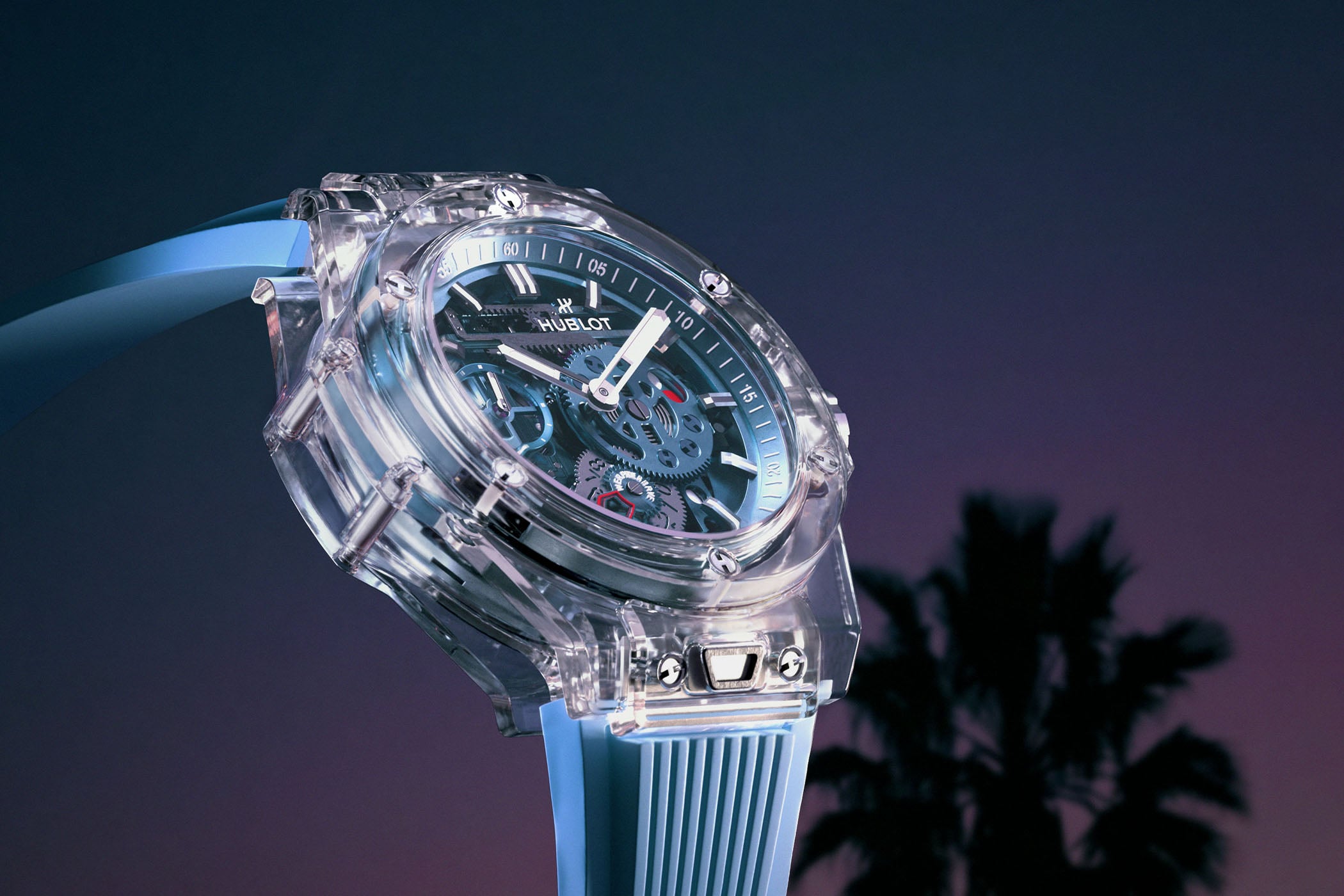
Hublot continues to lead sapphire innovation with colored sapphire cases in blue, red, and green, achieved through controlled chemical doping during the crystal growth process. These colorful sapphire cases, while expensive, demonstrate the material's versatility beyond simple clear crystals and hint at future possibilities for mainstream applications.
The Sustainability Factor
Sapphire's durability contributes to watch longevity, reducing the environmental impact of crystal replacements and extending timepiece lifespans. A sapphire crystal that maintains its clarity for decades means fewer service visits and less material waste. Some brands are beginning to market this sustainability angle, appealing to environmentally conscious consumers who view sapphire as both a practical and ethical choice.
Additionally, synthetic sapphire production generates less waste than mining natural gemstones, and the manufacturing process has become increasingly energy-efficient as technology improves. These factors align with growing consumer demand for sustainable luxury goods.
Future Outlook
Industry analysts predict that sapphire crystal will become virtually universal in watches priced above $300 by 2028. As production costs continue to decline and consumer expectations solidify, mineral glass may become confined to the most budget-oriented timepieces and specific vintage-inspired applications where its optical properties are deliberately preferred.
The next frontier appears to be sapphire dial components and full sapphire case construction at lower price points. As manufacturing techniques improve, the barrier between sapphire crystal and full sapphire watch cases will continue to blur, potentially making transparent sapphire watches accessible to a broader audience.
Frequently Asked Questions
Q: Should I wait for prices to drop further before buying a sapphire crystal watch?
A: While sapphire crystal costs continue to decline gradually, the current market already offers excellent value. Watches in the $400-$600 range now include quality sapphire crystal with AR coating, making this an opportune time to invest in a timepiece that will maintain its appearance for years.
Q: Are all sapphire crystals created equal?
A: No. Quality varies based on the manufacturing process, clarity grade, and AR coating application. Higher-end brands typically use Grade A sapphire with superior optical clarity and more durable multi-layer AR coatings, while budget brands may use lower-grade sapphire with single-layer coatings that wear faster.
Q: Will sapphire crystal watches hold their value better?
A: Sapphire crystal contributes to value retention by maintaining dial visibility and overall watch condition. While crystal material alone doesn't determine resale value, a watch with pristine sapphire crystal presents better for resale than one with a scratched mineral glass face, particularly in the pre-owned luxury market.
Discover More
Explore our latest watch releases featuring the newest sapphire crystal innovations. Read our industry news section for ongoing coverage of watchmaking trends and developments.
Sources: Monochrome Watches "Charlie Paris Alliance Collection Sapphire Dial Models" (May 2026); aBlogtoWatch "Casio Oceanus Manta Watches With Sapphire Crystal Bezels" (July 2023); Worn & Wound Hublot MP-11 Water Blue Sapphire coverage (April 2024).