From Breguet to IWC: The Patented History of Watch Shock Resistance
The Patented History of Shock Resistance in Watches
Early 16th-century watches were fragile by today's standards. These mechanical curiosities for the mega-wealthy could sustain catastrophic damage from a single drop, and accuracy was off by hours per day. While improving accuracy and reducing size were paramount for centuries, shock resistance remained on the back burner — until a series of groundbreaking patents transformed how watches withstand the rigors of daily wear.
Breguet's Pare-Chute: The First Patent (1790)
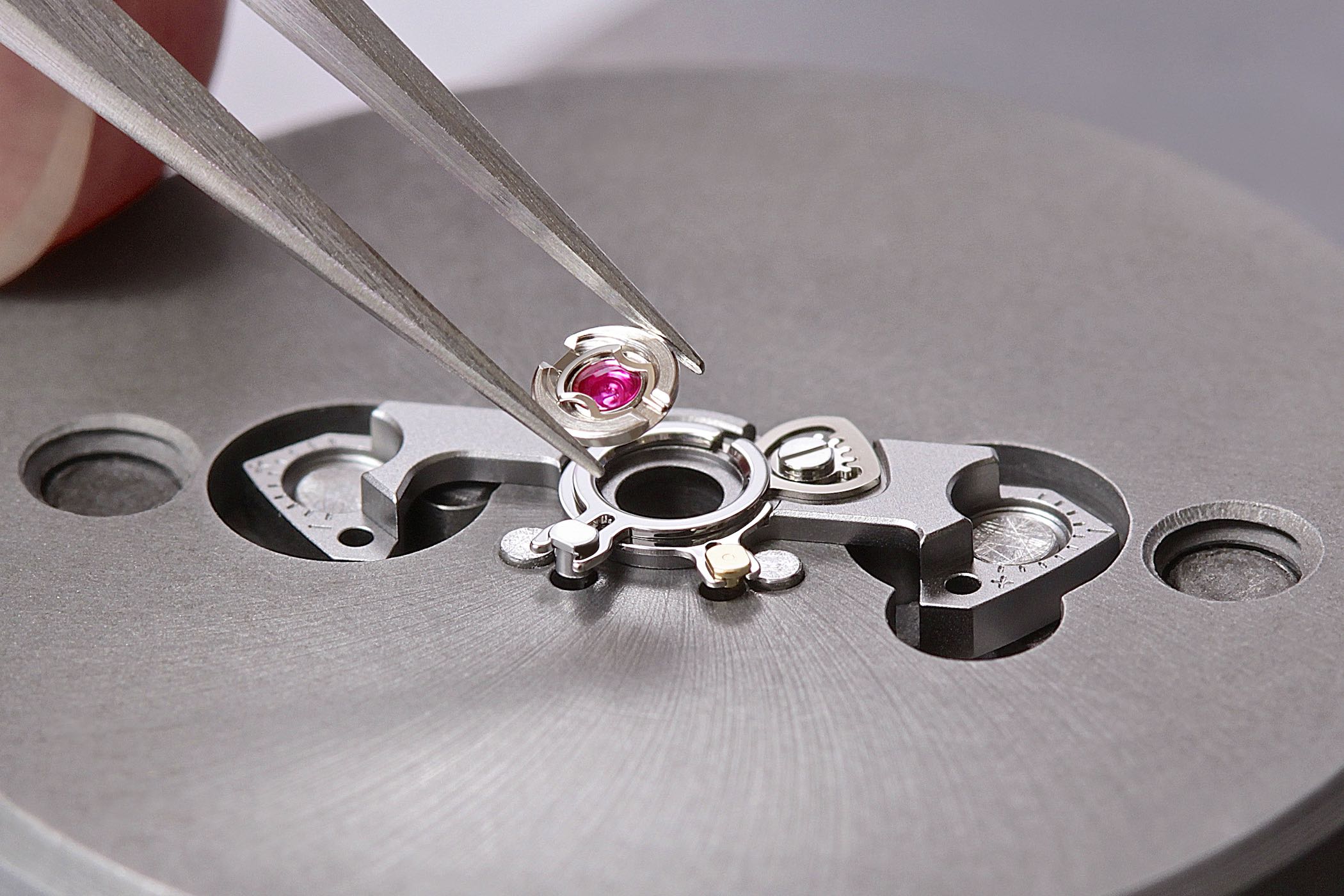
The story begins with Abraham-Louis Breguet, the master horologist who gave us the tourbillon, overcoil hairspring, and the first commercially available self-winding movement. In 1790, Breguet developed the pare-chute system — French for "parachute" — designed to protect the highly vulnerable balance wheel pivots from impact damage.
The system worked by shaping balance wheel shaft tips into cones that fit into cup-like bearings mounted on tiny blade springs attached to the bridge. Instead of impacts travelling directly to the shaft ends, they were absorbed by the suspension — similar to leaf springs on horse-drawn carriages. Breguet demonstrated the system dramatically at the house of Talleyrand, dropping a pocket watch on the floor and having guests confirm it continued operating perfectly.
The final variant debuted in 1806 and was exclusive to high-end Breguet Perpétuelle watches. While revolutionary, the pare-chute remained proprietary, and most watches outside Breguet's workshop remained unprotected.
Incabloc: The Industry Standard (1934)
The rise of wristwatches during World War I created urgent demand for shock protection. Soldiers needed hands-free timekeeping, and the exposed position on the wrist made movements far more vulnerable than pocket watches protected by soft pockets and lanyards.
Georges Braunschweig and Fritz Marti, Swiss engineers from La Chaux-de-Fonds, addressed this challenge with Incabloc. Patented in 1929 (Swiss patent no. 141098), Incabloc put jewel bearings and balance staff end stones within bushings mounted on lyre-shaped springs resembling a violin. The spring system allowed staff movement both vertically and side-to-side during impact, immediately returning to the correct position.
| Anti-Shock System | Year Introduced | Originator | Notable Users |
|---|---|---|---|
| Pare-chute | 1790 | A.L. Breguet | Breguet (exclusive) |
| Incabloc | 1934 | Braunschweig & Marti | Most Swiss movements |
| KIF Parechoc | 1944 | Georges Galet | Rolex (1950s-2000s) |
| Diashock | 1956 | Seiko | Seiko, Grand Seiko |
| Parashock | 1956 | Citizen | Citizen, Miyota, HMT |
| Paraflex | 2005 | Rolex | Rolex, Tudor |
| SPRIN-g PROTECT | 2021 | IWC | IWC (limited editions) |
By 1960, Incabloc had become the industry gold standard. Production hit a staggering 36 million units per year by the 1970s. It became so ubiquitous that brands printed "Incabloc" on dials as confirmation of quality. The quartz crisis nearly destroyed the company in the 1980s — quartz watches have no balance wheels to protect — but it survived and adapted for the mechanical renaissance.
Japanese Innovation: Diashock and Parashock
While Switzerland dominated early shock protection, Japanese manufacturers developed competitive alternatives. Seiko introduced Diashock in 1956, debuting in the Seiko Marvel — the first watch with a completely in-house designed movement. The system was similar to Incabloc with spring-loaded bearing assembly, but Seiko was able to match and even improve upon balance efficiency.
Citizen responded the same year with Parashock, famously testing the system by dropping watches from helicopters during promotional events. The brand also partnered with India's Hindustan Machine Tools (HMT) to supply Parashock movements from 1961 until HMT's closure in 2016.
Rolex's Paraflex: Bringing It In-House
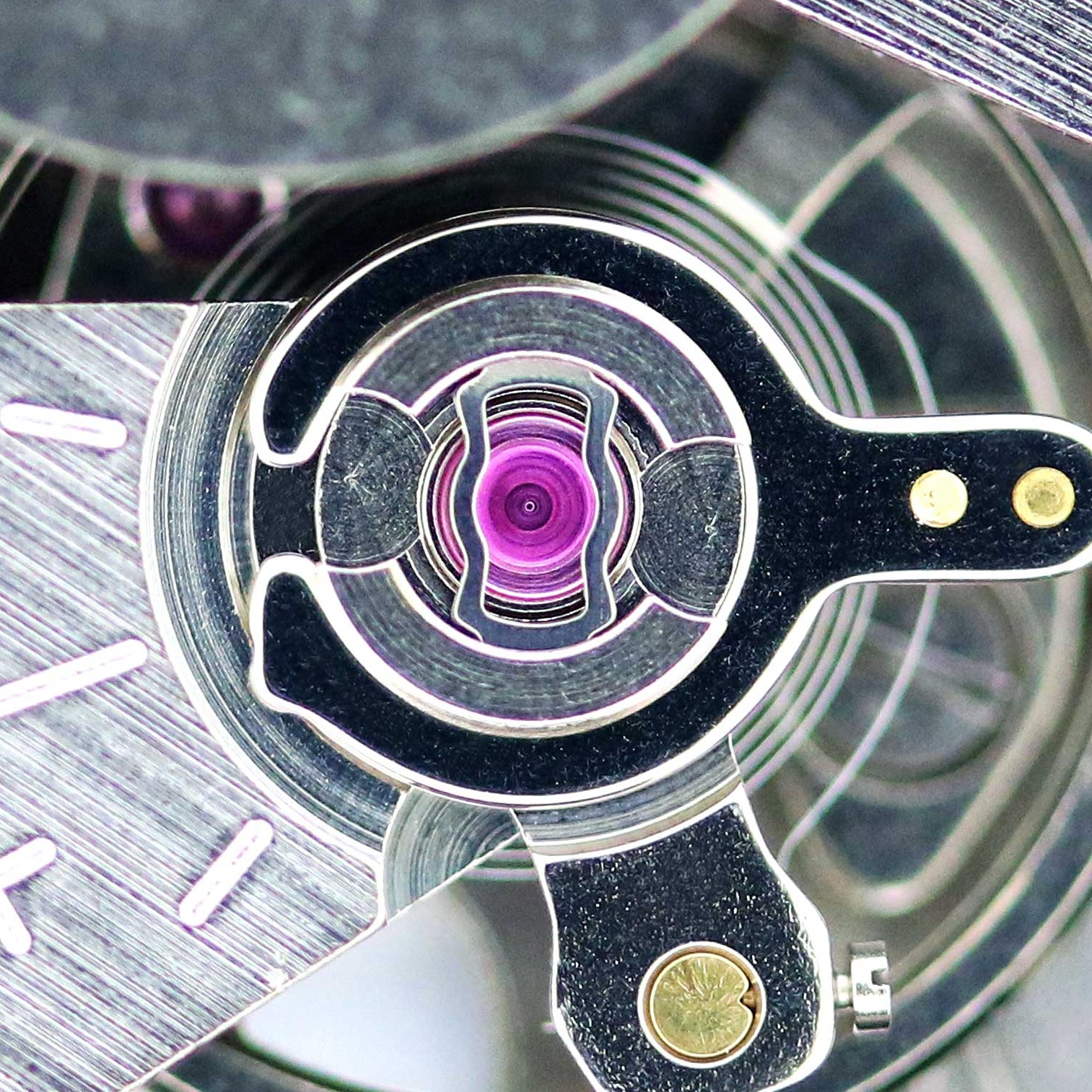
In 2005, Rolex developed Paraflex to improve shock resistance by up to 50% compared to conventional systems. Using a distinctive rice-grain-shaped spring, Paraflex absorbs energy more efficiently across multiple axes. The system's unique visual profile — a rounded-off rectangular spring at an offset angle — distinguishes it from competitors.
Rolex's move to proprietary shock protection reflects a broader industry trend: major brands increasingly prefer in-house solutions for critical components, reducing dependence on external suppliers and differentiating their movements.
Extreme Protection: IWC and Bremont
While standard shock protection focuses on the balance wheel, some brands have pushed boundaries to protect entire movements. IWC's patented SPRIN-g PROTECT system uses a cantilever spring made from Bulk Metallic Glass (BMG) alloy that's more elastic than steel. Tested at the University of Cambridge, it survived an astounding 30,000G — then applied to the Big Pilot Shock Absorber Tourbillon Skeleton XPL (rated at 10,000G for a tourbillon).
Bremont's Martin Baker series, designed to withstand ejections from fighter aircraft, mounts the movement on an anti-shock rubberised ring within the titanium Trip Tick case. This creates movement-wide protection beyond standard Incabloc balance wheel shielding.
The Future of Shock Protection
Modern smartwatches and quartz watches are naturally more shock resistant due to the absence of fragile mechanical components. However, for mechanical watches, shock protection remains essential. As movements become more complex — with tourbillons, minute repeaters, and other complications — protecting these delicate mechanisms from daily impacts becomes increasingly important.
New materials and manufacturing techniques continue to push boundaries. The trend toward silicon components, which are inherently more durable than metal alloys, combined with advanced case engineering, promises even better protection for the mechanical movements we cherish.
FAQ
Why is shock protection important for mechanical watches?
Mechanical movements contain extremely delicate components, particularly the balance wheel pivots which are thinner than a human hair. Impacts can bend or break these pivots, stopping the watch or causing inaccurate timekeeping. Shock absorbers redirect impact energy away from these fragile parts.
Can shock damage be repaired?
Most shock-related damage can be repaired by a watchmaker. Bent pivots can sometimes be straightened, though severely damaged components may need replacement. Modern shock absorbers significantly reduce the likelihood and severity of such damage.
Do all watches have shock protection?
Mechanical watches from reputable manufacturers almost universally include shock protection systems. Budget movements may use simpler systems like Novodiac, while premium movements typically use full Incabloc or proprietary systems. Quartz and smartwatches generally don't require dedicated shock protection.
Source: Monochrome Watches — "The History and Evolution of Shock Resistance in Watches" by Erik Slaven (August 1, 2026)
Watch Protection Technology Guide | Mechanical Movement Care