Crowns: The Knob That Controls Everything
The Knob on the Side
The crown is how you interact with your watch — setting time, winding, operating complications. Not all crowns work the same way. Here are the main types and when each matters.
Push-Pull Crown
The simplest design: pull out to set, push in to seal. Common on dress watches and low-water-resistance models.
- Advantage: easy to operate, no unscrewing needed
- Disadvantage: weaker seal than screw-down — less water resistance
Screw-Down Crown
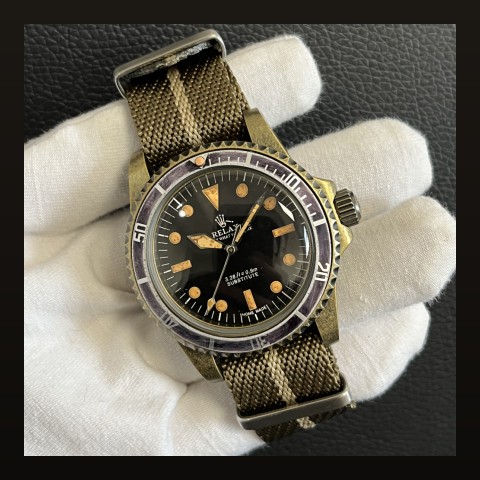
Threads into the case like a bottle cap, compressing a gasket for a tight seal. The standard for dive watches and any watch rated above 100m.
- Advantage: superior water resistance — the gasket is compressed mechanically
- Disadvantage: must unscrew before setting; extra step every time
Pushers (Chronograph)
External buttons that start, stop and reset the chronograph. Some are screw-down (like the crown) for water resistance; others are push-pull.
- Rule: never operate pushers underwater unless the spec explicitly allows it
Crown Guards
Flared case extensions flanking the crown — protecting it from impacts. Common on dive watches, absent on dress watches. Functional protection that also changes the visual profile.
Crown Position
Most watches place the crown at 3 o'clock. Seiko often uses 4 o'clock — reducing hand interference for right-wrist wearers. Bovet has used 12 o'clock for pocket-watch aesthetics.
Frequently Asked Questions
How do I know if my crown is screw-down?
Try gently turning it clockwise when it is fully pushed in. If it threads and tightens, it is screw-down.
Can a screw-down crown fail?
Yes — gaskets degrade. Regular maintenance keeps the seal intact.
Does crown position affect accuracy?
No — crown position is about ergonomics and aesthetics, not timekeeping.